


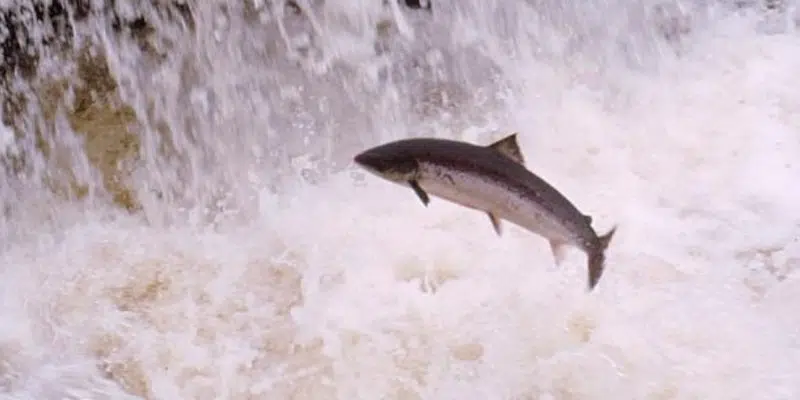
Aquaculture operations are among the factors leading to the “near local extinction” of Atlantic salmon populations in the Conne River and Little River on the province’s south coast, according to the Department of Fisheries and Oceans.
Marine survival is a major factor limiting the abundance of salmon as stated in DFO’s latest Atlantic salmon assessments.
Factors affecting marine survival include changing ocean conditions—such as water temperature—changes in zooplankton, and predation.
DFO says on the province’s south coast, aquaculture is another potential factor impacting marine survival.
While research into low rates of marine survival is ongoing, DFO aquatic science biologist Nick Kelly points to a number of reasons why aquaculture may be having an impact.
He says research from other countries shows possible issues with sea lice and disease transmission. Research on the genetic impacts conducted by DFO also shows “some degree of hybridization on south coast populations between farmed salmon and wild salmon.”