


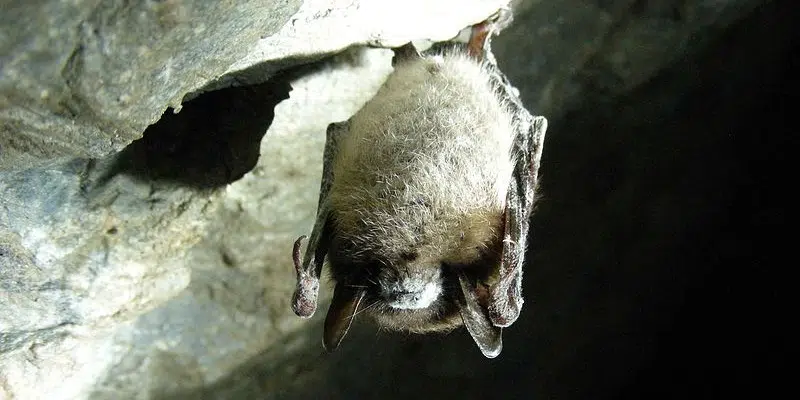
Residents are being encouraged to report any bat sightings as part of ongoing efforts to monitor the potential spread of white-nose syndrome, a deadly disease that’s been decimating bat populations throughout North America.
White-nose syndrome is a fungus that can grow on a bat’s nose and face. The fungus irritates bats and rouses them from their winter hibernation, causing them to seek out food when little to no food is available. That causes the animals to weaken, and then die.
The Department of Fisheries, Forestry and Agriculture says public reporting of sick or dead bats, as well as those seen flying in winter or very early spring is a good way to monitor the fungus.
Residents are asked to report locations where bats are known or suspected to be hibernating, and are asked never to touch a bat with their bare hands, or enter hibernation sites to prevent the spread of illness.
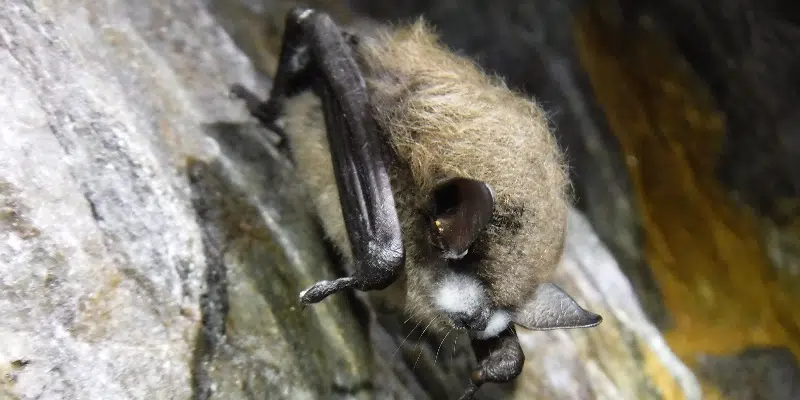
Photo courtesy of the Department of Fisheries, Forestry and Agriculture
Both of the province’s native species, the Little Brown Bat and the Northern Bat are listed as endangered under the Engangered Species Act.
It is illegal to disturb, harass, injure or capture bats or to disturb or destroy where they live or hibernate.
To report a bat sighting or a suspected bat dwelling please contact the provincial Wildlife Division at 709-637-2025 or the Canadian Wildlife Health Cooperative toll-free bat line at 1-833-434-BATS (2287). Please provide GPS coordinates and or photos if possible.