


The conversation around addictions and the rise in drug-related deaths intensified in August.
The province’s Chief Medical Examiner, Dr. Nash Denic, would join the conversation, setting the record straight on 11 suspected cocaine-related deaths. Dr. Denic would reveal a steady increase in drug toxicity deaths over the last five years in the province.
The following month, the breakdown of the 11 cases would be released:
– two cases were cocaine-only related deaths
– three cases were cocaine-with-opioid (other than fentanyl) related deaths
– one case of cocaine-with-fentanyl related death
– one case where cause of death is due to use of stimulants other than cocaine
– one case where cause of death is due to an opioid other than fentanyl
– three deaths were ruled natural or accidental (ie: not drug related). In these three deaths, two had evidence of previous cocaine use.
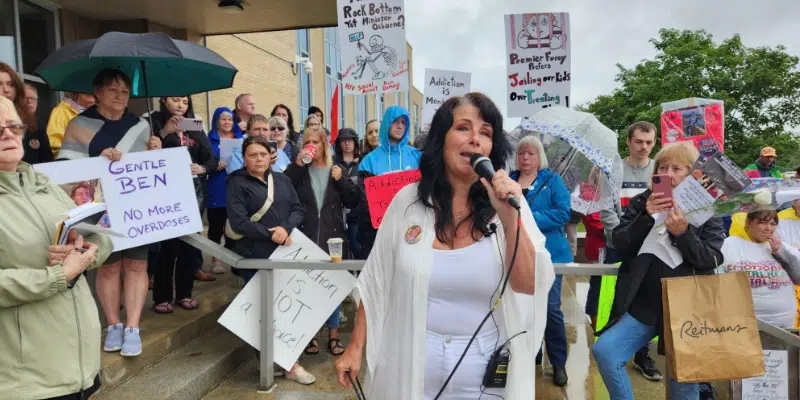
The community would also respond, with harm reduction organizations offering opioid poisoning response programs and a rally on the steps of Confederation Building. Families affected by addictions shared their stories, calling for government to address the drug crisis.
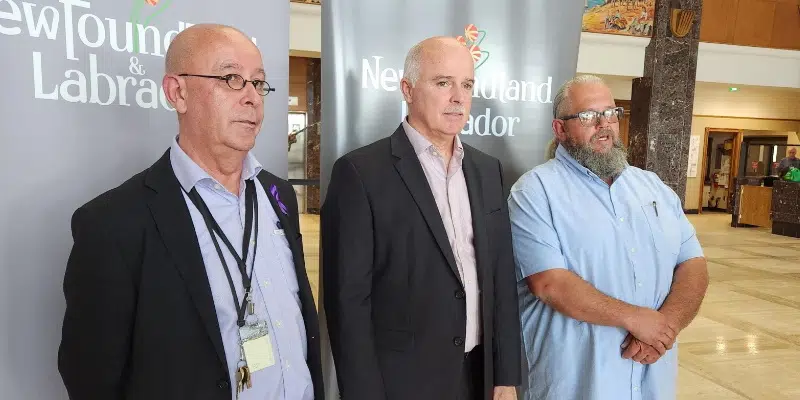
Gerard Yetman, Executive Director of Aids Committee of Newfoundland and Labrador (left), Health Minister Tom Osborne (centre), and Jeff Bourne, Executive Director at U-Turn Addiction Drop in Centre (right) at the announcement of the all party committee.
On September 1, government announced an All-Party Committee on Substance Use and Addictions.
Two Certainties in Life

The fallout of the federal government’s carbon tax would be felt in August.
The cost-of-living continued to rise due to record-high inflation and the new carbon tax, driving grocery prices and hitting Newfoundlanders and Labradorians at the pumps.
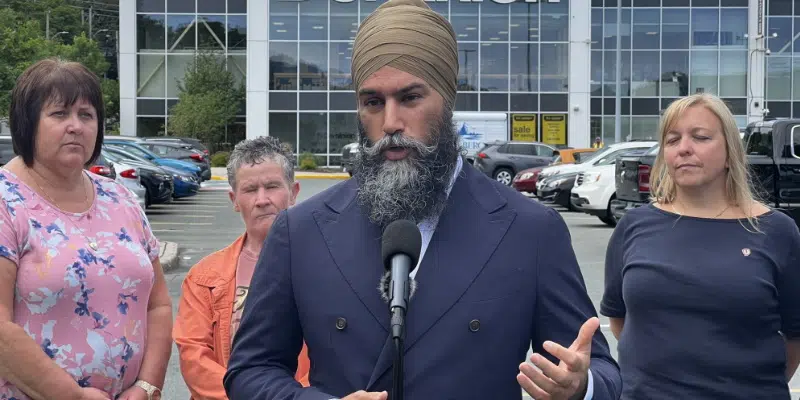
Federal NDP Leader Jagmeet Singh would make cost-of-living the theme of his visit to the province, calling for the Liberals to address the price of groceries and drop the HST and GST on home heating fuel.
Premier Andrew Furey would once again pen a letter to Prime Minister Justin Trudeau, asking him to pause the clean fuel regulations and reverse increases to the carbon tax.
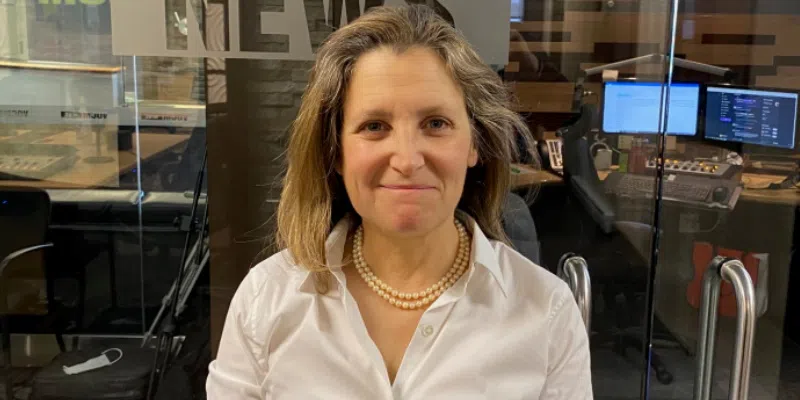
Ottawa would again defend its decision, this time during a visit to the province by Deputy Prime Minister Chrystia Freeland who toured Pattern Energy’s hydrogen production and export facility.
Freeland would cite the benefits of the climate action incentive payments, but acknowledged the concerns surrounding the cost-of-living.
Riding the Bus

(Ministers John Abbott, Krista Lynn Howell, Sarah Stoodley and Premier Andrew Furey.)
Another policy being reviewed in August came ahead of the school year.
On August 7, the provincial government would announce the elimination of the controversial 1.6 km busing rule. Previously thanks to the decades-old policy, anyone who lived within 1.6 km of their school had to find their own way there regardless of their age. With the phased-in approach to the elimination, over 4,000 more students were now able to catch the bus.
Reaction to the change was varied. When government first announced the media availability where the policy would be changed, Education Critic Barry Petten would call for the elimination of the policy. However after the rule was eliminated, he would question the timing of the move, especially after the Liberals voted down his Private Members’ Bill in the House of Assembly.
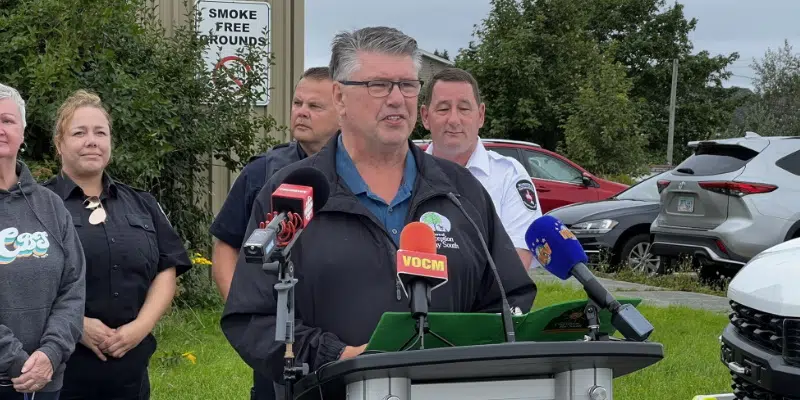
The Town of CBS would celebrate the move, as the geographic restriction had a major impact on the sprawling municipality.