


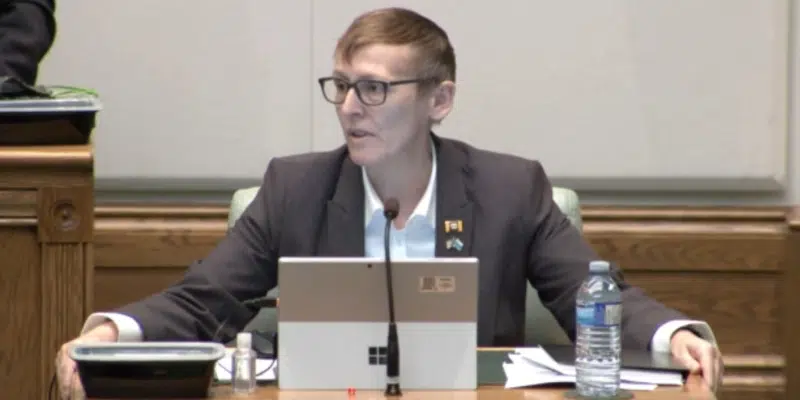
The MHA for Torngat Mountains says one of the lasting legacies of residential schools has been a pattern of blaming the victim for intergenerational trauma.
Lela Evans says the damage caused by removing children from their homes, families and communities has to be acknowledged.
Evans said in the House of Assembly that after the discovery of 215 unmarked graves connected to a residential school in Kamloops, BC about the impact residential schools have had on generations of people.
“Not everybody was able to overcome that,” she told her colleagues in the legislature. “And a lot of people had problems, you know and they didn’t do well in life, and their children didn’t do well in life, and now we sit back and we blame them. We blame them for being alcoholics, we blame them for domestic violence, we blame them for abuse, we blame them for their inability to parent.”
Evans says her mother, who attended a residential school, seldom spoke of her experiences but did open up as her children got older. Her mother recalled being so thirsty and unable to get a drink that she scraped the frost off the windows.
Her mother told them that she and her siblings would tell their parents about the kinds of things they endured when they returned home late in the spring, only to have to send them back to the same school in the fall.