


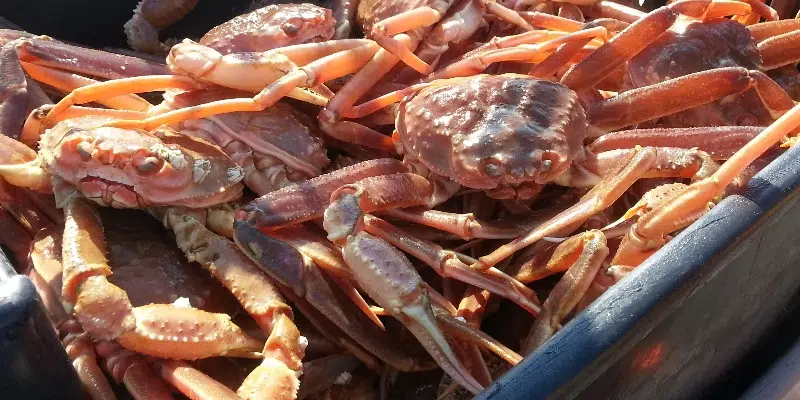
Crab quotas are now set, but the price-setting process remains in limbo, and harvesters are asking the federal government to push the start of the season back by a week while they get their ducks in a row.
Harvesters gained a major victory last week following weeks of protests asking government to loosen the rules and allow greater competition in the local market.
Snow crab represents a huge portion of the overall value of the province’s fishery and the season is set to start next week.
DFO today increased the TAC (Total Allowable Catch) for the 2024 snow crab season by 5.2 per cent.
The TAC is now set at 57,568 tonnes.
The price however, has yet to be determined. Talks broke off last week.

Harvester John Efford Jr.
John Efford who led the recent protests, told VOCM Open Line with Paddy Daly that the FFAW is unified and they are looking forward to an orderly crab fishing season, but he’s asking DFO to delay the start by a week so they can get everything they need in place.
“Please federal government, listen to us, we want this postponed, we don’t want to have to turn our protests from provincial to federal, so please, listen to us.”
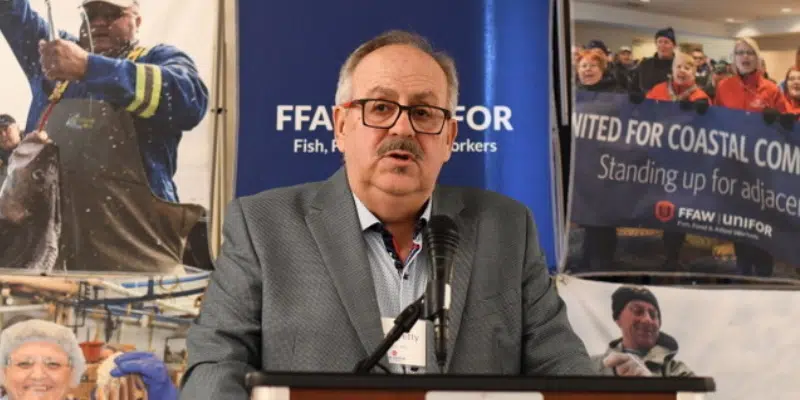
FFAW President Greg Pretty
Meanwhile, FFAW President Greg Pretty says a long-range view of the fishery is needed even as the union applauds the major changes achieved last week.
The union emerged from talks with government on Friday declaring that outside buyers will be allowed to purchase catches from local harvesters across all species.
Harvesters have made it clear that it’s not about limiting hours for plant workers, but about opening up competition and allowing more processing capacity.
FFAW President Greg Pretty, who until last week was entrenched in crab price setting negotiations, says change was needed.
“We can’t have a system where we have plant workers, at ever shrinking numbers…we can’t have a situation where harvesters are going bankrupt, we can’t have a situation where…licenses are being taken over by these corporations, we can’t have illegal licensing. That was the path we were on last week, so there’s a big change in that.”
Pretty says the problem, in part, is the fact that the industry is continually jumping from season, to season, without a clear long-term understanding of what is happening.
“We can’t look at this season-to-season, I mean that’s one of the reasons we’re the situation we’re in today, we don’t have a long-range view of what this fishery should look like.”
Questions Remain, Says ASP

The Association of Seafood Producers says many questions remain about what exactly allowing outside buyers into the local fish industry will mean.
Executive Director Jeff Loder says in Newfoundland and Labrador, processors pay workers’ compensation and all the rules and regulations surrounding the collective bargaining process remain.
He says an outside buyer has to abide by all the existing rules including workers’ comp, EI, and for species like crab, the buyer would still be subject to dockside grading.
Loder says producers, who were not part of the discussions on the changes announced last week, are still awaiting the details, and questions remain.
“Processors provide ice for free in Newfoundland,” says Loder “who’s going to provide the ice, and what is going to be the charge?” he asks. “In the lobster industry…processors and buyers provide lobster…traps and pots” through a program in place. “I mean, obviously processors in Newfoundland are not going to incur costs associated with an individual harvester who then sells that product elsewhere, so it’s quite a complicated issue.”