


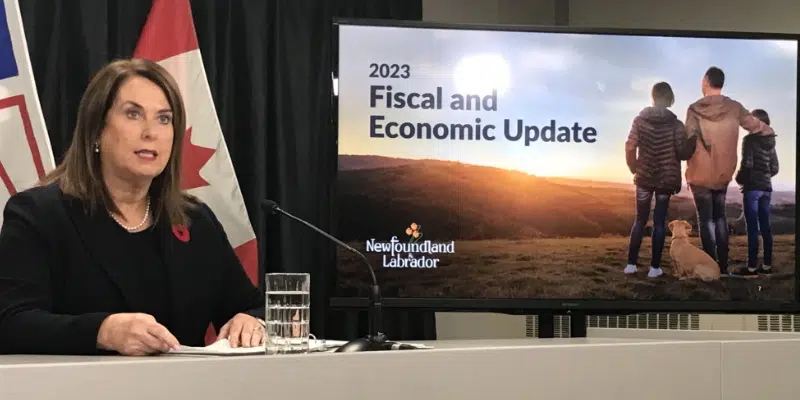
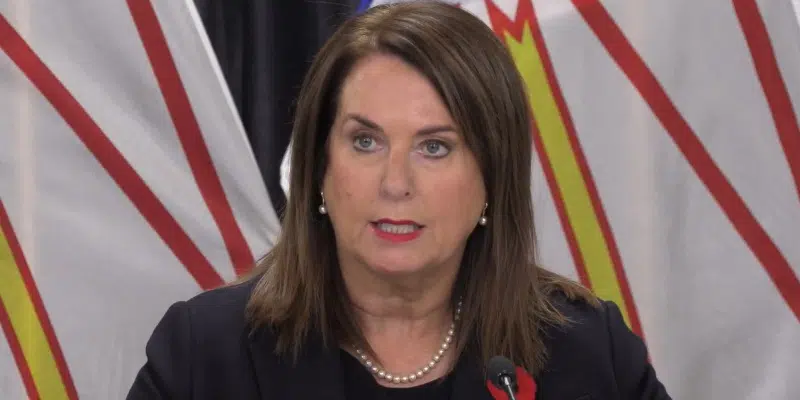
Finance Minister Siobhan Coady reports that the province is holding its own, and is on track to meet or exceed 2023 fiscal forecasts in most areas—but if you’re looking for a repeat of last year’s $500 cost of living benefit, you’re out of luck.
Coady delivered her fall fiscal update this morning.
She says the province is forecasting a deficit of $154 million for the end of the fiscal year—very different from last year’s surplus.

“Therefore there is no addition monies available to give back to the people of the province.”
Revenue is $204 million higher than forecast, while expenses remain largely the same—save for increases to collective bargaining agreements.
Government also says:
• Most expenses remain the same as projected at budget, with a few exceptions including increases negotiated in collective bargaining agreements and debt expenses due to rising interest rates.
• The average price of oil for 2023-24 has been revised to US$85 from the Budget 2023 projection of US$86. The Canada to United States exchange rate has been adjusted to 74.3 cents from the Budget 2023 forecast of 75.7 cents.
The province will borrow up to $700 million to maintain liquidity, while the Future Fund will be at $300 million by the end of the fiscal year.
Employment is forecast to increase by 2.2 per cent, with the unemployment rate forecast to go down to 1.2 per cent. Retail sales are forecast to increase by four per cent, while the population went up by 1.3 per cent on an annual basis.
The full report is available online.