




It’s a hectic time for small businesses as they try to diversify markets and find new supply chains.
Duncan Robertson of the Canadian Federation of Independent Business says half of their members either import from or export to the United States.
He says large sectors are going to be hit hard, but the small businesses servicing those sectors are going to be affected as well.
There will be lots of small businesses affected by the first round of Canadian tariffs: grocery distributors & retailers, the hospitality industry, clothing & shoe stores and the beauty industry.
US tariffs will hit Canadian small businesses hard. Canada’s retaliatory tariffs…
— Dan Kelly (@CFIB) February 2, 2025
Robertson says the ripple effect will require some government help.
“There are some ways in which government can step up, ensuring there are some supports on the table, addressing interprovincial trade, as well as ensuring we’re eliminating red tape wherever we can find it.
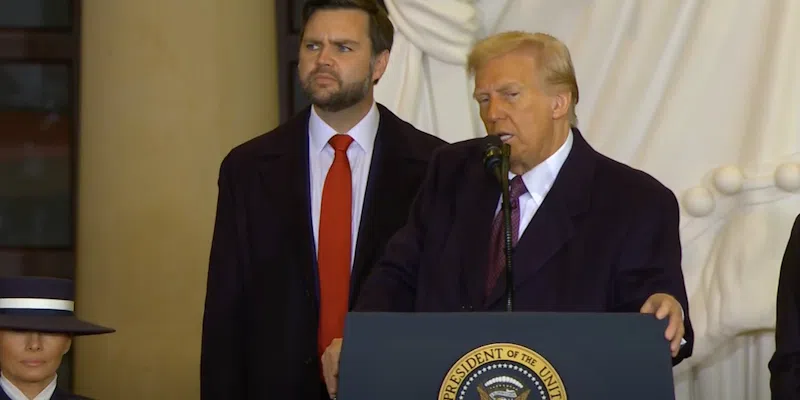
Photo via CPAC
Trump’s tariffs on Canada, Mexico and China are unprecedented, says a professor in Memorial University’s Faculty of Business. Tom Cooper says Canada and the U.S., in particular, have been building a more integrated economic system for the last five decades, and what’s happening now is unlike anything seen before.
Cooper says retaliatory tariffs on American goods coming into the U.S. was a necessary response. He believes Trump will frame the tariffs imposed on other countries as a win, but Canada has to stand tough.
“If we can get these tariffs eliminated in a short period of time, we’ve also got to remember the psychology behind Trump, and make sure that we’re not just doing this out of pride, but we’re doing it to make sure that Canadian consumers, Canadian businesses and the Canadian economy as a whole is protected.”
Bold Response Needed, Federation of Labour Says
The Federation of Labour is calling for a “bold, united response” to help protect workers and the economy in light of the U.S. trade war on Canada.
The federation is recommending a number of actions to help save local jobs, including income support for workers, enhancements to E.I., long-term economic diversification planning, procurement directives and strong retaliatory measures.
Opposition Leader Tony Wakeham says the premier must outline more concrete steps to address the economic crisis other than simply calling on Newfoundlanders and Labradorians to buy local. He says market diversification is a priority, and a provincial procurement barrier on American companies must be implemented immediately. Wakeham also suggests that the province cancel existing contracts where possible and limit opportunities for American companies to bid on future contracts.