


Grocery prices are continuing to rise, and Atlantic Canada is seeing the brunt of those increases.
According to Statistics Canada, the food inflation rate in Newfoundland and Labrador was 4.2 per cent in June, 3.3 per cent in July and 3.9 per cent in August.
That’s well above the Canadian average.
Sylvain Charlebois of Dalhousie University’s Agri-Food Analytics Lab says food prices across the Atlantic region are under “tremendous pressure.”
He says food prices in the Atlantic provinces are typically higher than other parts of the country due to low population density and distance from major centers.
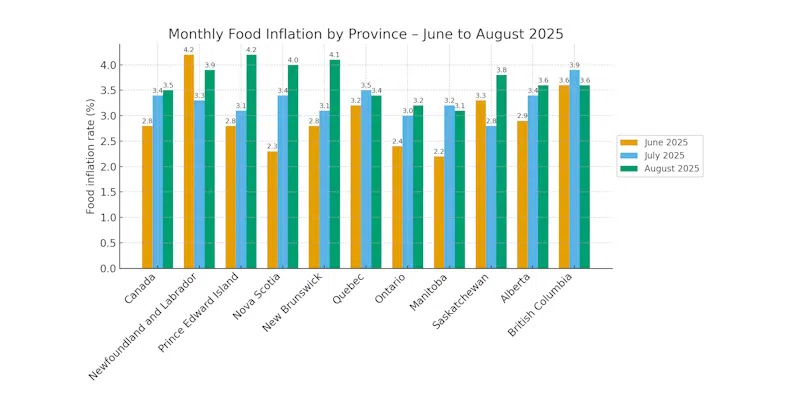
Data by Statistics Canada, graphic developed by the Agri-Food Analytics Lab at Dalhousie University (submitted)
Charlebois says drought in many areas has increased the cost of feed, and the geopolitical situation has become far more complicated.
“American policies around tariffs are pushing prices higher, like coffee and tea and things like that, so it’s unfortunate that everyone is paying for Donald Trump’s tariff demands. Prices are rising unfortunately and will continue to rise.”
Charlebois says if you’re hoping for food prices to drop, “you’re dreaming,” but they are expecting food inflation to drop, putting less pressure on consumers.