


An alarming drop in precipitation levels across most of the province continues, and while the entire province needs a good downpour, some small amount of relief may be in the forecast for late this week.
Starting with little to no snow last winter and continuing through this summer, Newfoundland and parts of Labrador 2025 has been a year of drought.
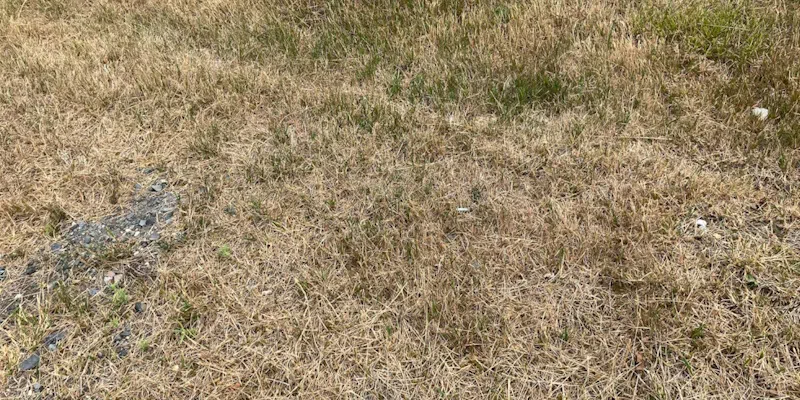
Dead grass caused by drought, summer, 2025 (VOCM News)
Wells have dried up, and ponds and reservoirs are well below normal levels in many parts of the province. Not to mention the devastating wildfires that burned through tinder-dry woods, destroying hundreds of homes and structures on the Conception Bay North Shore in August.
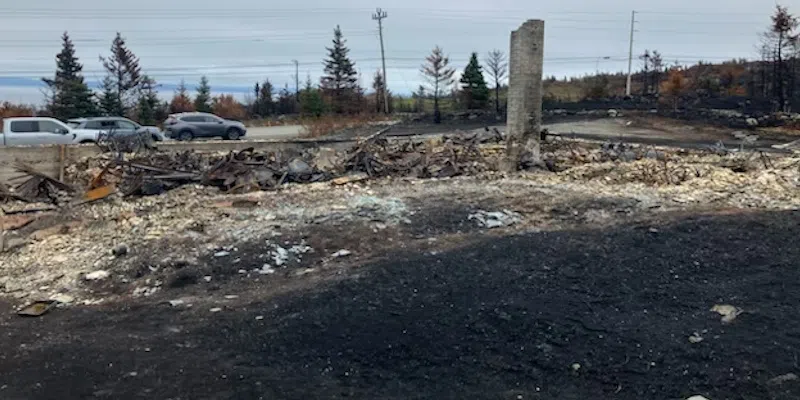
The remains of what was the old Adam’s Cove schoolhouse (VOCM News)
In central Newfoundland, Beothuck Lake is more than 20 feet below normal, exposing a lake bed that many have never seen in their lifetime.
Levels on the Humber River in Deer Lake were so low that sunken pulp logs decades old were exposed. Sunnyside, Clarenville and Torbay have all issued restrictions on water use, while St. John’s is also asking people not to waste water.
Even NL Hydro has had to make changes to hydro power on the island because of low levels at reservoirs.
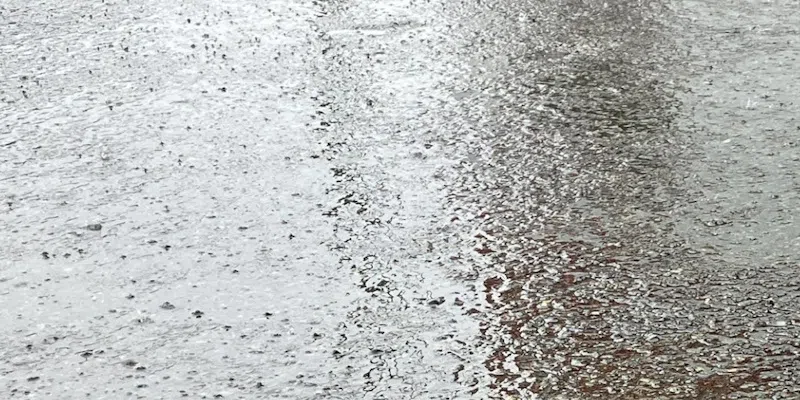
A brief but welcome downpour in August (VOCM News)
Environment Canada meteorologist David Neil says the last time the province experienced above average precipitation was in April.
Some drizzle and fog moved in in October, but even September and October have experienced well below average precipitation.
“We had a fairly large area of the province, mainly the east, south and central, that was about half normal precipitation or less for September,” he says, and so far in October, “the entire Avalon Peninsula is about a quarter or less of monthly precipitation, and then the same areas like central and the south are in that sort of half or less range right now.”
Neil says what the province needs is rain, and lots of it, with some small relief coming for eastern Newfoundland possibly later in the week.
“It does look like there’s a system that’s eventually going to make its way across, and there are some indications it could set up right over the eastern part of the island and bring more persistent, accumulating rainfall to much of eastern Newfoundland.” However, Neil cautions, “the jury’s still out.”