


There are no tax or fee increases in this year’s budget, and no cuts to the public service.
The overall economic forecast is looking a bit rosier this year thanks to an increase in the projected price of oil (at US$79 a barrel vs US$73 last year) and increased production. Crude oil prices are trading much higher than that…currently hovering between US$108 and US$111 a barrel.
The overall deficit is projected at $688.5 million this year, that’s down dramatically from the nearly $ 1 billion deficit projected during the fall fiscal update, thanks largely to greater oil revenue.
Projected government revenue is expected to increase to $10.8 billion this year over the $10.7 billion last year, while NL leads the country in GDP growth at 5.5 per cent.
Government is expected to borrow $3.9 billion this year, down from the $4.1 billion borrowed last year.
The previous government had predicted a return to surplus this year, no doubt factoring in revenue from the Churchill Falls MOU, however Premier Tony Wakeham had already indicated a balanced budget would not be possible this year, or next.
Any Possible Revenue from Hydro MOU Not Factored into Fiscal Forecast for 2026

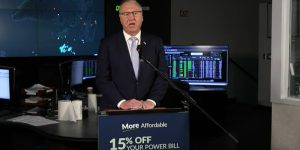
Finance Minister Craig Pardy (VOCM News)
Finance Minister Craig Pardy says government was diligent in including revenue they know they’re going to get and what they don’t yet have.
That means any possible revenue from an agreement with Hydro Quebec on Churchill Falls expansion and development of Gull Island is not factored into this year’s fiscal forecast.
The review panel’s findings on the MOU is due tomorrow, however, Pardy sounded optimistic that a deal is possible.
He says anything that had a “really high probability of return…i.e. anything to do with the Upper Churchill or Gull Island,” was not included in the budget. “Do we have an insatiable desire for it to come…and to be allotted out in our forecast? 100 per cent.”
Pardy says his understanding is that conversations with the Quebec premier have gone well.
While no money has been specifically allotted for a referendum on the MOU, Minister Pardy says if a referendum falls within the estimated $8 million needed for a provincial election, then they’ve accounted for that potential expense.