



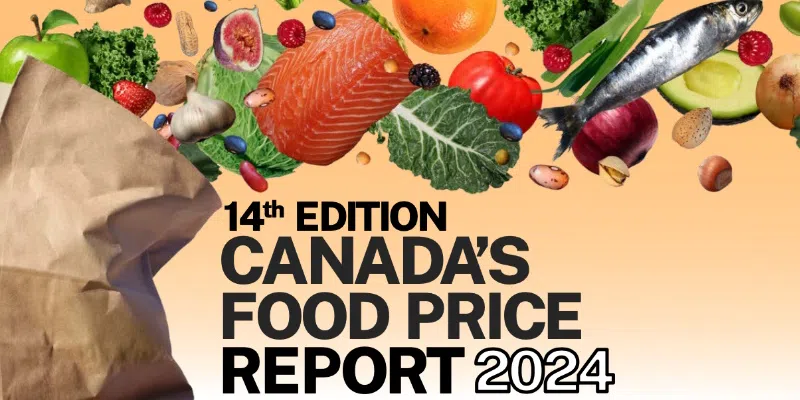
Canada’s Food Report for 2024 predicts the average family of four will spend $700 more next year to put food on the table.
Prices will keep rising next year, though at a slower pace, according to the report from four Canadian universities.
The 14th annual report by Dalhousie University, the University of British Columbia, the University of Guelph and the University of Saskatchewan predicts food prices will rise between 2.5 per cent and 4.5 per cent next year as inflation continues to moderate.
Food costs are up by 5.9 per cent, says the report, leading to profiteering allegations against supermarket giants. However, while data from the Bank of Canada shows that prices did increase in 2020 due to inflation, markups were near zero or negative in 2022.
Still, major chains like Loblaws are reporting record profits over the past 12 months.
Sylvain Charlebois, a researcher with Dalhousie’s agri-food analytics lab, says it’s important to remember that many chains have their eggs in more than one basket.
“I know a lot of people in Newfoundland and Labrador probably think that the grocers are a lot to blame,” he said.
“But when you actually look at the data very closely, grocers have done very well financially but not because of food. It’s because of other items they sell, non-food items like cosmetics and prescription drugs, even clothing. Financial services for Loblaws, that division is doing very well for them.”
While price gouging might not be fully responsible, it’s cold comfort for the millions of Canadians dealing with food insecurity. Food bank usage is up by 32 per cent at two million visits for 2023—a 78.5 per cent jump compared to 2019.
You can hear more from Sylvain Charlebois on the topic during Your Money with Nancy Sneddon on Saturday at 3 p.m. on Your VOCM.