



Bond rating agency Morningstar DBRS says the PC Party capitalized on a desire for change and voters’ concerns about affordability, health care and energy policy to win a ‘surprise’ majority in Tuesday’s election.
Morningstar DBRS says while the election of a PC government in Newfoundland and Labrador represents meaningful change following 10 years of Liberal governments, it also has “significant implications” for Quebec.
It says a definitive agreement between this province and Quebec on the MOU reached on hydro development in Labrador was expected to be reached by April 1st of 2026, but says that timeline now looks ambitious.
Furthermore says the bond rating agency, Quebec’s next general election is scheduled for October of 2026 with the ruling Coalition Avenir party trailing significantly in the polls.
That, says Morningstar DBRS, raises real questions about whether the MOU will be finalized and NL will realize the fiscal and economic benefits anticipated.
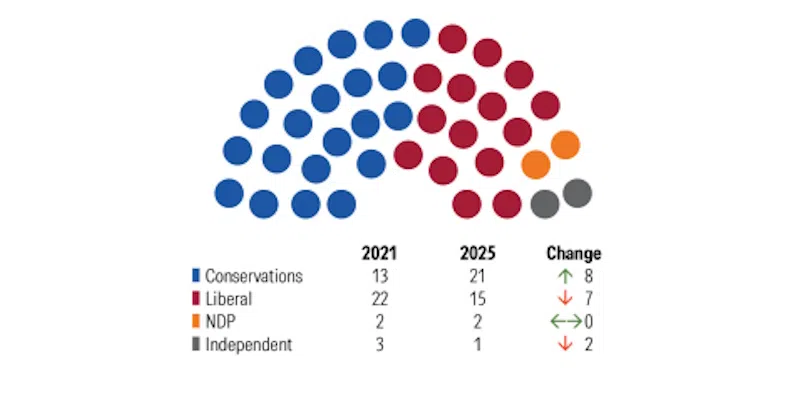
A graphic of the seat count following Tuesday’s provincial election (Morningstar DBRS)
The bond rating agency says the most recent provincial budget projected a return to balance by 2026-27, however that “may be difficult to achieve” considering PC campaign promises, weaker oil prices and uncertainty around completion of the MOU.
DBRS says it will assess the new government’s economic and fiscal policies as more details emerge, but will likely have to wait until the next budget for clarity on the province’s medium-term fiscal direction.
The PC party’s campaign platform included plans to increase the basic personal income tax exemption amount to $15,000, at an estimated cost of $93 million, as well as plans to increase access to health care services and expand policing.