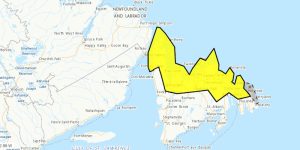



Provincial officials have confirmed a case of rabies on the island – in a bat in the Trinity Bay area leading to warnings to the public about the precautions to take if encountering a bat.
It’s only the second case of rabies in a bat in the province, the first having occurred in Cartwright in 2004.
Rabies is a fatal disease in mammals that is usually spread by the bite of an infected animal.
Government officials say there is no elevated risk to the public or animal health at this time, and rabies can naturally occur in healthy bat populations at a very low level – typically 0.5 to 1 per cent of the bat population.
The province says the recent case serves as an important reminder that rabies is always a risk wherever bats are present, and to always treat any interaction with a bat seriously and take the appropriate precautions to avoid close contact with the flying mammals.
Close contact includes being bitten, scratched or touched by a bat, finding a bat in your home or finding a bat in the room of someone who is unable to reliably report if they have been bitten or not either due to age, or illness.
Any bite or bat exposure assessed by a doctor or health practitioner must be reported to Public Health as soon as suspected.
If a pet, like a cat, brings a bat home, the cat should be taken to a vet for advice and the bat should be collected for testing.
Pet owners are being encouraged to vaccinate their animals against rabies and people are being asked to avoid and report animals that show signs of having rabies.
That includes strange behavior, staggering, frothing at the mouth, choking or making unusual noises.
The Canadian Food Inspection Agency is reporting 36 positive rabies cases in bats so far this year including 23 in Ontario, four in Quebec, four in B.C., five in Saskatchewan and the most recent case in Trinity Bay.