



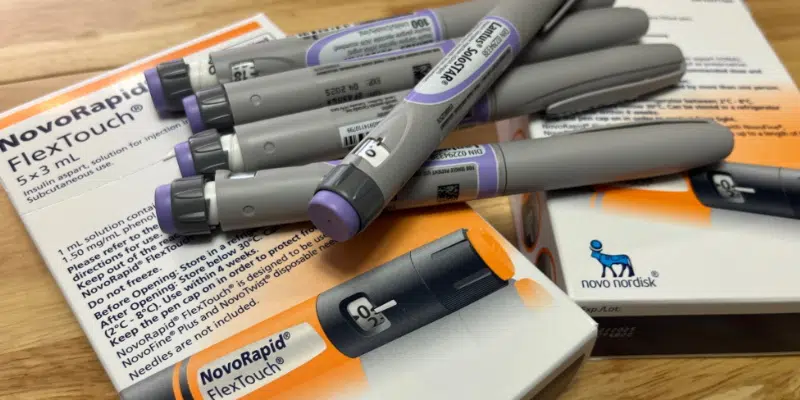
A local pharmacist says government’s decision to switch some biologic medications in the Prescription Drug Program to generic options is a good move that should have little impact on patients.
Dr. Kara O’Keefe says most of the injectable drugs included are insulins used to treat diabetes, with the exception of a few that are used to treat things such as arthritis and psoriasis.
She says there are some small differences when comparing brand name to generic under a microscope, but they are unlikely to be less effective.

(Dr. Kara O’Keefe, Photo via Twitter.)
O’Keefe says it’s a lot more difficult to replicate the large molecules in these drugs, which is why they call them biosimilar medications. Though it’s almost impossible to make an exact copy of the original drug, the similar version is put through rigorous testing by Health Canada and organizations all over the world. It’s been proven through research that these medications work well for many patients.
In the case a patient finds the generic brand does not work well for them, she says an exemption form can be filled out to reinstate government funded coverage for the original drug.
By switching to generic, O’Keefe says it will save an average of $20 on each prescription—something that sounds small, but can result in big savings.
She says there are patients who require up to ten boxes of insulin every 3 months—that’s $200 in savings from one person. With those savings, the drug program is able to expand coverage for other costly drugs. Due to recent cost savings, O’Keefe says the NLPDP was able to expand coverage for oral blood thinner medications, something that used to have zero coverage due to cost.